Allergy checks by drug class
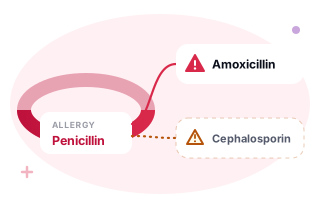
A recorded penicillin allergy warns when amoxicillin is prescribed, because amoxicillin is a penicillin. Cephalosporins warn at a lower level, as a possible cross-reaction.
Safety & security
What is in the product as shipped, how each part works, and where each one stops. Every line on this page can be shown to you in the software.
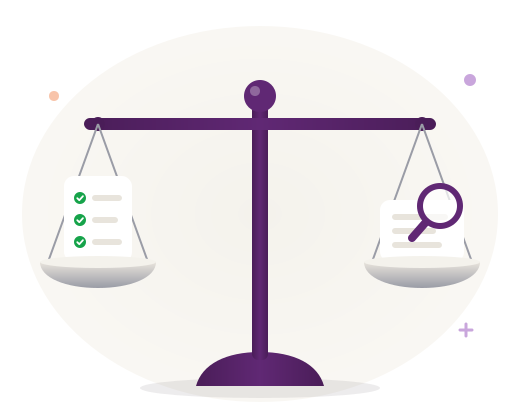
The software warns and records. It does not overrule a clinician: a warning that cannot be overridden gets worked around, and then it protects nobody.
A recorded penicillin allergy warns when amoxicillin is prescribed, because amoxicillin is a penicillin. Cephalosporins warn at a lower level, as a possible cross-reaction.
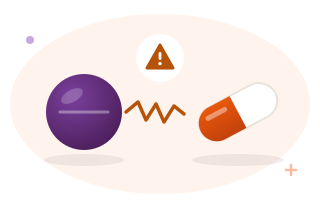
Built-in checks for common drug interactions, as a starter set. It can be extended with a licensed drug database if you want fuller coverage.
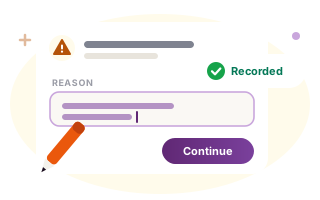
Warnings never block. The prescriber types a reason, and it is kept against the prescription for anyone reviewing the case later.
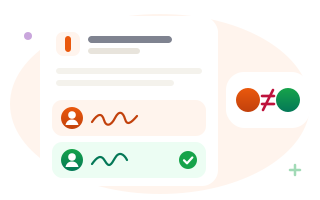
The person who enters a result cannot release it. Somebody else checks it first; until then it is marked provisional and kept out of the patient portal.
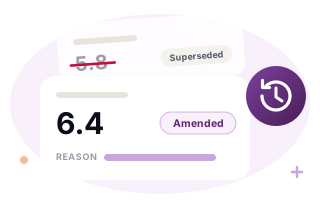
Correcting a released result needs a reason. The superseded value stays on the record, the result leaves the patient portal until it is checked again, and the report reads as amended.
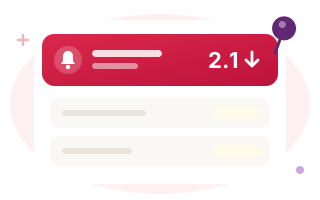
A result beyond the critical figures your laboratory sets is flagged on entry, shown in red, and stays above the verification queue until somebody records who they told.
Each of these is part of the product as shipped, and each can be shown to your IT team.
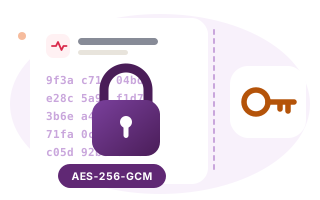
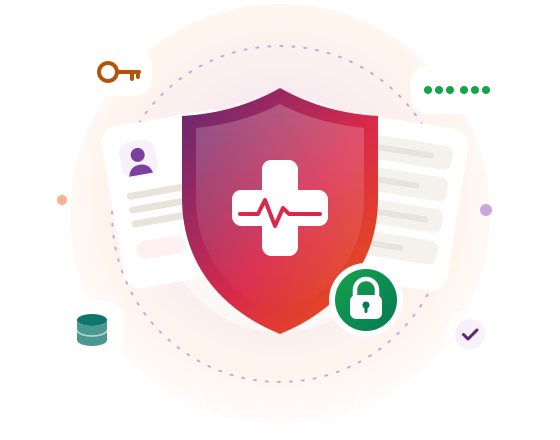
Medical history, allergies and lab results are encrypted with AES-256-GCM, including every superseded value in a result's amendment history. The key is held outside the database.
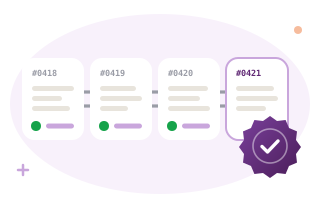
Every entry is signed. Editing, forging, renumbering or deleting entries, including the newest ones, is detectable, and the log can be checked on demand.
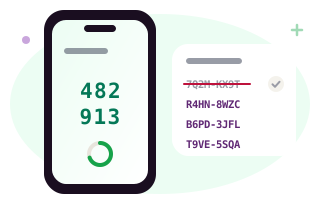
One-time codes from an authenticator app (TOTP), with single-use recovery codes for a lost phone.
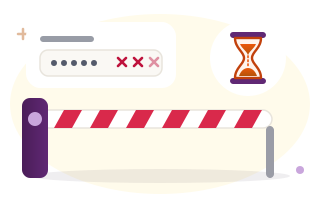
Repeated failed sign-ins are throttled per account, and the person making them cannot clear the count.
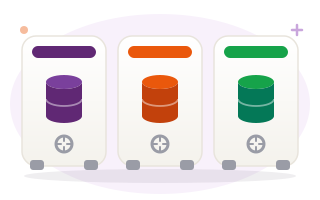
On the hosted edition, each hospital's records are kept in their own database, not in a shared table with a hospital column.
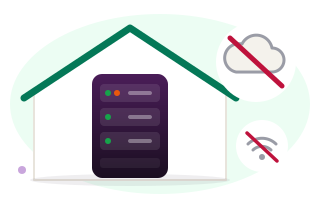
The self-hosted edition runs inside your network with no internet connection at all. Patient data never leaves your server.
Sign-ins, sign-outs and failed sign-ins go into the same signed log. It names the account attempted and never stores what was typed.
Seven roles, each reaching only the pages its work needs. The check runs on every page request, not only in the menu.
Every request that changes data must carry a token from your own screen, so another site cannot submit a form on a signed-in user's behalf.
The records are yours, in formats other software can read.
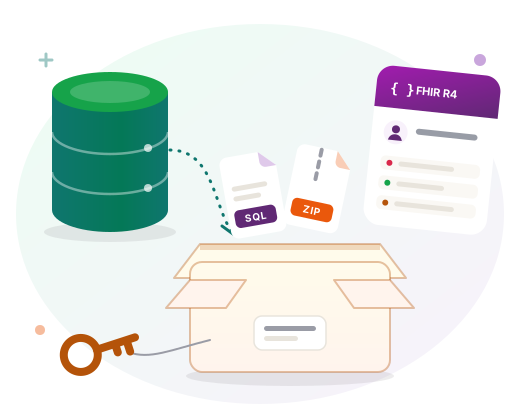
The built-in backup writes a plain MySQL dump and a zip of uploaded documents. It is your server: nothing is withheld and there is nothing to ask for. The dump is ordinary MySQL and the code is ordinary PHP, so it can be restored on other hardware.
Professional plan and above
A FHIR R4 document bundle for a single patient, covering encounters, conditions, prescriptions, observations, lab reports and allergies. Part of the Health ID and consent module.
Restoring a dump on another server needs your application key as well. Without it the encrypted fields cannot be read, and nothing tells you so at the time. Keep the key safe, and make sure it goes wherever a restore goes.
A hospital that has been over-promised before should hear these from us first.
For hospitals in India: ABHA-ready — record ABHA numbers and manage patient consent, ready for ABDM integration. The connection to the national gateway is on the roadmap; the software does not connect to it today. Hospitals in other countries do not see it.
We do not describe the product as meeting any external accreditation or regulatory standard. That is for an auditor to judge, not for a vendor to declare.
The prescribing checks are a starter set of common interactions and drug allergies. They warn, they do not block, and they do not replace a licensed drug database or the prescriber's judgement.
We publish no savings percentages, sizing or availability figures. Where a number would have to be measured first, we leave it out rather than guess.
Book a demo and bring your IT team's questions. We will show each of these in the software, and tell you plainly where it stops.